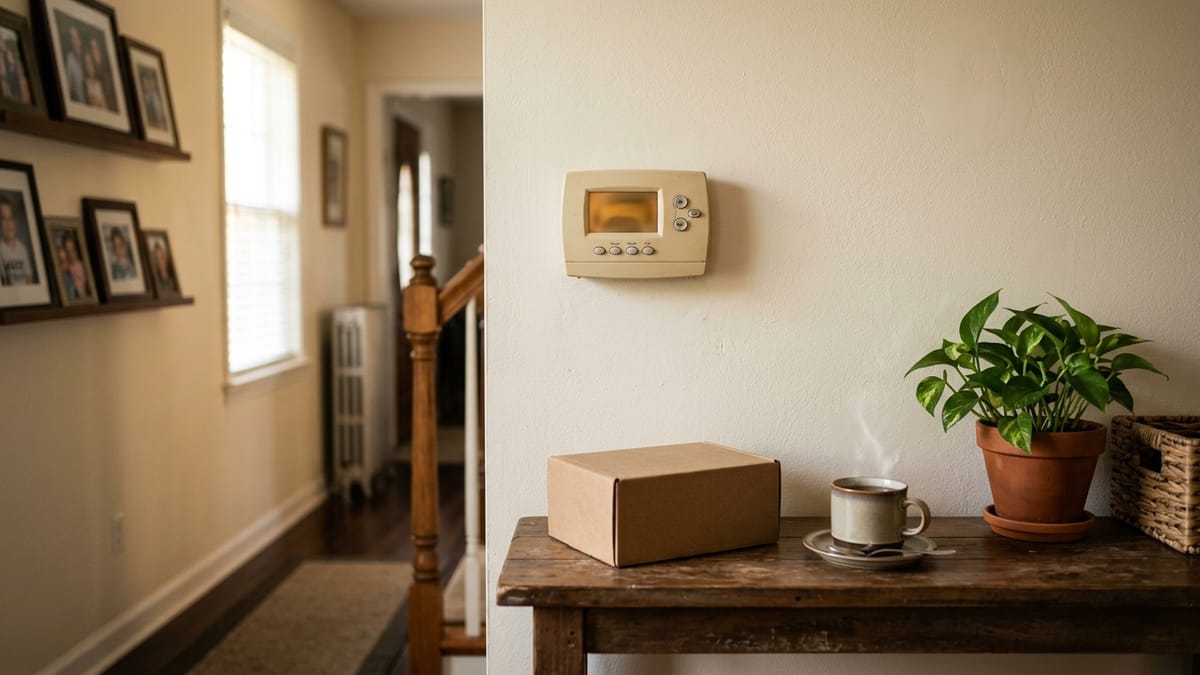
A smart thermostat sounds like one of the easiest smart home upgrades: replace the old thermostat, connect an app, and let the house manage temperature more intelligently.
Sometimes that is true. A smart thermostat can make heating and cooling easier to schedule, easier to adjust remotely, and easier to understand.
But it is not automatically the right upgrade for every homeowner.
If your current thermostat already works well for your routine, your HVAC system is complicated, your Wi-Fi is unreliable near the thermostat, or you do not want another app-controlled device, a smart thermostat may create more friction than value.
This guide is a practical decision framework. It is not a product ranking, installation guide, or savings guarantee.
Quick Answer
You may benefit from a smart thermostat if:
- your home is empty for predictable periods
- you forget to adjust the temperature when you leave or go to sleep
- you want to change settings while away from home
- your HVAC system is compatible
- your household will actually use the app, schedule, or smart features
You may not need one if:
- your current thermostat already fits your routine
- someone is home most of the day and prefers steady temperatures
- your HVAC system needs a special controller
- you dislike app setup, accounts, Wi-Fi devices, or software updates
- the purchase is based only on vague savings promises
The better question is not “Is a smart thermostat good?” It is “Will this thermostat solve a real problem in my home?”
What a Smart Thermostat Actually Adds
A smart thermostat is still a thermostat. Its basic job is to control your heating and cooling system.
The “smart” part usually adds features such as:
- phone-based remote control
- daily or weekly scheduling
- automatic adjustments when you are away
- learning features that adapt to your preferences
- energy use feedback or HVAC runtime information
- software updates
- possible utility program or rebate compatibility
Those features can be useful. For example, remote control can help if you travel, forget to adjust the temperature before leaving, or want the house comfortable before you return.
But features vary by model and service. Some households use the smart features every week. Others set one schedule and rarely touch them again.
Who Is a Good Fit for a Smart Thermostat?
A smart thermostat is more likely to make sense when your heating and cooling routine changes.
It may be a good fit if you are often away during the day, travel regularly, or already adjust the thermostat manually when you leave and return. In that case, a smart thermostat can make an existing habit easier.
It may also help if your household wants better visibility. Some ENERGY STAR certified smart thermostats provide information such as runtime or energy-use feedback, depending on the model and service.
The strongest fit signals are practical:
- You have a compatible HVAC system.
- Your Wi-Fi is reliable near the thermostat.
- You are comfortable using an app.
- Everyone in the household can still adjust the temperature.
- You want scheduling or remote control, not just a new gadget.
If those are true, a smart thermostat is worth considering.
Who May Not Need One?
A smart thermostat is less compelling when the current setup is already simple and effective.
You may not need one if your household is usually home, prefers a steady temperature, and already uses the existing thermostat without trouble.
You may also want to pause if the thermostat location has weak Wi-Fi, if you are not comfortable managing another connected device, or if the household depends on a simple wall control that everyone understands.
Some HVAC systems also deserve extra caution. ENERGY STAR notes that HVAC type, wiring, voltage, variable-speed systems, multi-stage systems, zoned systems, and some heating types can affect compatibility. If you are unsure, check the thermostat maker’s compatibility tool, your HVAC documentation, or a qualified professional before buying.
A smart thermostat that does not fit your system is not a smart upgrade.
About Savings: Be Careful With the Promise
Smart thermostat marketing often leans on savings. That is understandable, but homeowners should treat savings as possible, not guaranteed.
The U.S. Department of Energy says thermostat setbacks can reduce heating and cooling costs when used appropriately. ENERGY STAR certified smart thermostats must also meet energy-savings criteria based on actual-use data.
That does not mean every household will see the same result.
Your outcome can depend on:
- climate
- utility rates
- insulation and air sealing
- HVAC equipment type and condition
- how often the home is empty
- the schedule you actually use
- how much comfort range your household accepts
- whether the smart thermostat is installed and configured correctly
If you already keep a careful schedule with a programmable thermostat, a smart thermostat may add convenience more than dramatic savings. If you rarely adjust your current thermostat and the home is empty for long periods, the opportunity may be larger.
Use savings as one factor, not the whole decision.
Compatibility Pre-Check
Before shopping, answer these questions:
- What kind of HVAC system do I have?
- Is the current thermostat low-voltage or line-voltage?
- Does the system have a C-wire or another approved power setup?
- Is it a heat pump, multi-stage, variable-speed, or zoned system?
- Does the thermostat maker list my system as compatible?
- Would a manufacturer-specific controller be better for high-efficiency equipment?
- Is the thermostat close enough to reliable Wi-Fi?
- Does my utility offer a rebate or program, and does the model qualify?
Do not guess on wiring or system type. This article is not installation advice. If you are unsure, use the manufacturer’s compatibility checker or ask a qualified HVAC professional.
Comfort and Household Usability Matter
The best smart thermostat is not the one with the longest feature list. It is the one your household can live with.
Ask:
- Can someone change the temperature at the wall without opening an app?
- Can a spouse, parent, guest, or house sitter use the basics?
- Will automatic away settings annoy someone who is still home?
- Are pets, sleep schedules, or medical comfort needs relevant?
- Who receives alerts?
- Who manages the account, app updates, and Wi-Fi changes?
If the thermostat saves a little energy but causes daily frustration, it may not be a good upgrade.
The Three Gates: Need, Fit, and Ownership
A point score can hide a dealbreaker. Use three gates instead. A thermostat should pass all three before it reaches your shortlist.
| Gate | Pass when | Stop or investigate when |
|---|---|---|
| Need | Scheduling, forgotten adjustments, travel, or remote access is a recurring problem | The current thermostat already fits the household routine |
| Fit | The exact model is compatible with the HVAC equipment, control requirements, and available power | System type, wiring, voltage, accessories, or manufacturer guidance is unclear |
| Ownership | The household accepts the app, account, Wi-Fi, updates, alerts, and manual fallback | Only one person can manage it, or the basic controls become harder for someone else |
Do not average the gates. A strong need does not cancel an uncertain HVAC fit, and a compatible thermostat does not create value if nobody wants the connected features.
Buy, Wait, or Skip
Consider buying or shortlisting a smart thermostat if:
- compatibility looks clear
- you want scheduling or remote access
- the household will use the features
- Wi-Fi and app setup are not major obstacles
- you have checked for rebates without assuming they are guaranteed
Wait if:
- you do not know your HVAC type
- you are unsure about wiring or power
- your Wi-Fi is weak in that area
- household comfort preferences are not settled
- you are mainly reacting to a sale price
Skip for now if:
- your current thermostat works well
- you already use a simple schedule successfully
- smart features would go unused
- your system needs specialized control
- you do not want another connected device
Skipping is not failure. Sometimes the best smart home decision is leaving a working system alone.
Common Mistake
The most common mistake is buying the thermostat before checking the home.
Homeowners may focus on features such as learning schedules, app control, or energy reports. Those features matter, but they come after the basics:
- Will it work with the HVAC system?
- Will it stay connected?
- Will the household use it correctly?
- Will comfort settings actually change?
If the answer is unclear, do the compatibility check first.
Best First Step
Before shopping, write down how your thermostat is used today.
Use three questions:
- When do we change the temperature now?
- Who changes it?
- What is frustrating about the current setup?
If the answers point to schedule confusion, travel, remote access, or forgotten adjustments, a smart thermostat may solve a real problem.
If the answers are “nothing, it works fine,” you may not need one yet.
What to Read Next
If you want to keep researching before buying, read:
If you are still building the broader smart home plan around it, read:
Those guides can help you separate a useful comfort upgrade from a purchase that only sounds smart.
Sources and Verification Notes
The feature, compatibility, and energy-savings boundaries in this guide were checked on October 10, 2026 against:
- ENERGY STAR smart thermostat overview and buying guidance
- ENERGY STAR smart thermostat key product criteria
- U.S. Department of Energy Energy Saver guide
These sources describe certified-product criteria and general thermostat practices, not a guaranteed result for a particular home. Check the exact thermostat maker’s compatibility tool, current utility terms, and qualified HVAC guidance before purchasing or changing controls.